What Is Neuro Resilience Training and How Is It Different from Traditional Leadership Development?
If you’ve spent any time around leadership development, you’ve probably heard a lot of advice like this:
Communicate more clearly.
Build trust.
Show empathy.
Manage conflict.
Give better feedback.
Create psychological safety.
Develop emotional intelligence.
And here’s the thing…
None of that advice is wrong.
In fact, I have taught many of those same concepts myself over the years.
But lately I’ve found myself asking a different question.
Why do some leaders walk out of a training inspired and equipped, only to find themselves falling back into old habits the first time things get stressful?
You probably know the feeling.
You leave a workshop excited. You have pages of notes, a handful of new strategies, and every intention of leading differently on Monday morning.
Then Monday morning shows up.
Someone misses a deadline.
An employee becomes defensive.
A meeting goes sideways.
Your inbox explodes.
Before lunch, you’re leading exactly the way you promised yourself you wouldn’t.
What happened?
Did the training fail?
Did you suddenly become a bad leader?
Probably not.
The problem may be that traditional leadership development focuses primarily on what leaders should do.
Neuro Resilience Training begins by asking a different question.
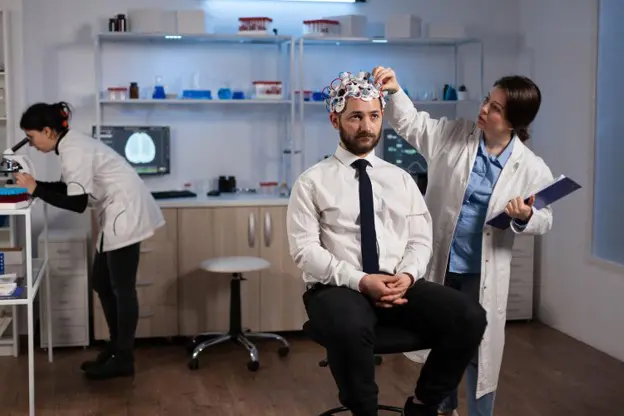
What is the brain doing that makes those leadership skills easier to use one day and harder to use the next?
That question changes everything.
Traditional leadership development teaches communication skills.
Neuro Resilience Training helps you understand why communication changes when the brain predicts increasing cost.
Traditional leadership development teaches emotional intelligence.
Neuro Resilience Training helps you understand why emotional awareness narrows when energy becomes limited.
Traditional leadership development teaches conflict resolution.
Neuro Resilience Training helps you recognize what both nervous systems may be predicting before either person says another word.
Traditional leadership development often assumes people always have access to their best thinking.
Neuro Resilience Training recognizes that access depends on conditions.
That doesn’t replace traditional leadership development.
It strengthens it.
Because knowing a strategy and being able to use that strategy are not always the same thing.
One of the biggest shifts people experience during Neuro Resilience Training is realizing that the brain is not simply reacting to situations.
It is constantly predicting them.
It is asking questions like:
- How much is this going to cost me?
- Is this situation becoming more or less manageable?
- How much uncertainty is there?
- Do I have enough energy for what’s about to happen?
- Can I predict what comes next?
Those predictions influence whether we become curious or defensive…
Flexible or rigid…
Connected or withdrawn…
Thoughtful or reactive.
Once you understand that, leadership begins to look different.
Instead of asking, “How do I get people to behave differently?”
You start asking,
“What conditions are shaping what their nervous systems are predicting?”
That includes your own.
Because the first nervous system every leader manages is the one they bring into the room.
That’s why Neuro Resilience Training is different.
It isn’t another collection of leadership techniques.
It isn’t another personality assessment.
It isn’t another communication model.
It is a Neuro Informed approach to understanding why people do what they do and why the same person can lead brilliantly one day and struggle the next.
The goal isn’t simply better leadership behaviors.

The goal is understanding the nervous system that produces those behaviors.
Because when leaders understand what the brain is predicting, they stop trying to force better behavior.
They start creating conditions where better behavior becomes more likely.
And that may be one of the most important leadership shifts of all.
If this way of thinking resonates with you, I hope you’ll consider joining one of my upcoming Neuro Resilience Training courses.
We’ll explore how prediction, brain energy, uncertainty, and connection influence leadership every day, and more importantly, how to use that understanding to become a better leader, teammate, parent, educator, coach, or helping professional.
Because great leadership isn’t just about knowing what to do.
It’s about understanding the brain that’s trying to do it.
